Best Vegetarian Foods 2026: High-Protein Options, Seasonal Eating & What to Avoid
Being vegetarian in India is easy because of the variety of dals, paneer, vegetables and grains available. But many people still struggle with protein, energy levels, or eating the same food year-round. The right vegetarian diet depends on your goals, the season, and how you combine foods.
This guide covers the best vegetarian foods, high-protein sources that actually work, which options are expensive but useful, what to eat in different weather, and which foods or habits you should avoid.
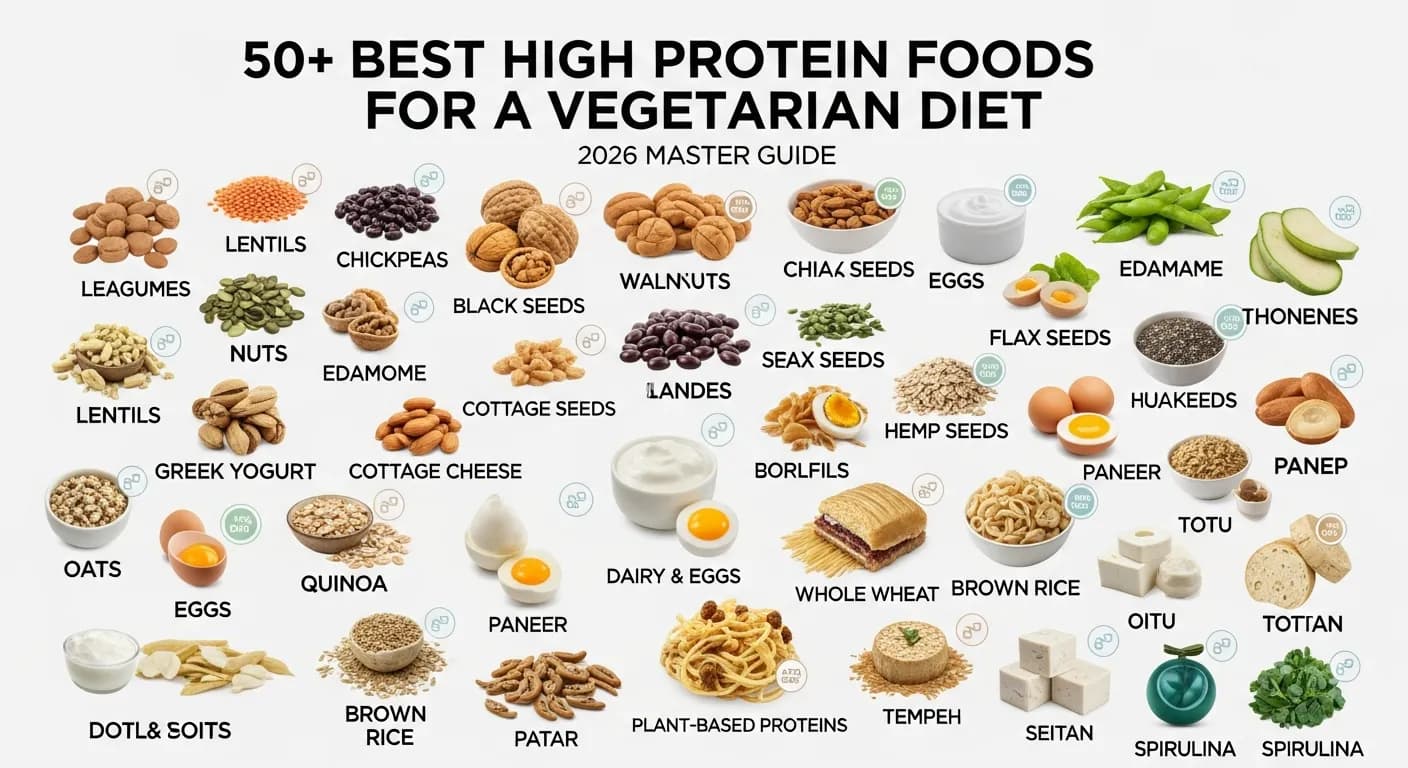
Best High-Protein Vegetarian Foods (Especially for Indians)
These are the most practical and effective protein sources for vegetarians:
- Soya chunks / Soya granules – Highest protein among common vegetarian foods (around 50g+ per 100g dry). Cheap, versatile, and easy to cook in gravy.
- Paneer – Around 18g protein per 100g. Complete protein, widely available, and great for muscle support.
- Dal (Moong, Masoor, Toor, Chana, Urad) – Everyday staple. 7–12g protein per katori when cooked. Pair with roti or rice for better amino acid profile.
- Rajma & Chole – Around 11g protein per katori. Filling and nutritious.
- Greek yoghurt / Hung curd – Higher protein than normal dahi. Good for breakfast or post-workout.
- Sprouted moong – Better digestibility and higher usable protein.
- Peanuts, almonds, pumpkin seeds – Good protein + healthy fats for snacks.
Soya chunks and paneer are usually the biggest protein boosters in an Indian vegetarian diet.
Most Popular Everyday Vegetarian Foods
These are the foods most Indian vegetarians rely on daily:
- Dal-roti / Dal-chawal
- Paneer sabzi
- Rajma-chawal or Chole-bhature (in moderation)
- Sprouts salad
- Dahi and lassi
- Seasonal sabzi with roti
These traditional combinations are still among the best when done properly.
Expensive vs Affordable Vegetarian Options
- Affordable & high value: Soya chunks, moong dal, masoor dal, peanuts, seasonal vegetables. These give the best protein per rupee.
- Moderate: Paneer, Greek yoghurt, almonds, quinoa.
- Expensive but useful: Plant protein powders, imported superfoods like chia seeds, hemp seeds, or high-quality nuts. Good as add-ons, not necessities.
You do not need expensive imported superfoods. Traditional Indian foods like soya, dal, paneer, and seasonal vegetables cover most needs.
Which Vegetarian Foods to Eat in Which Weather?
Summer
Focus on cooling and hydrating foods.
Best: Lauki, tinda, cucumber, watermelon, muskmelon, buttermilk, light moong dal, fresh salads.
Avoid excess: Very heavy, oily, or deep-fried foods.
Monsoon
Digestion slows down in humidity. Prefer light, easy-to-digest, and immunity-boosting foods.
Best: Moong dal, ginger, turmeric, light soups, bitter gourd, bottle gourd, sprouts (well-cooked), amla.
Avoid: Street food, leftover food, and too many raw salads that can cause stomach issues.
Winter
This is the best time for richer and warming foods.
Best: Sarson ka saag, methi, spinach, peas, gajar, paneer dishes, dry fruits, jaggery, warm dal, amla.
Good for energy: Slightly heavier meals with healthy fats work better in cold weather.
What Vegetarians Should Avoid or Limit
- Only eating sabzi and roti without enough dal, paneer, or soya — leads to low protein.
- Too much maida, fried snacks, and sugary foods — even if vegetarian, they are not healthy.
- Ignoring iron and B12 — Many vegetarians become deficient. Include leafy greens + vitamin C, and consider B12 sources or supplementation if needed.
- Over-reliance on processed vegetarian meat alternatives — They are convenient but often high in salt and additives.
- Eating the same food every day — Rotate dals, vegetables, and protein sources.
- Heavy street food in monsoon — Higher risk of stomach infection.
Quick Recommendations by Goal
- Everyday balanced diet: Dal + roti + seasonal sabzi + dahi
- Higher protein (gym / muscle): Soya chunks + paneer + Greek yoghurt + dal
- Weight management: More protein + fibre (sprouts, dals, vegetables) and controlled oil
- Budget-friendly: Soya + moong dal + peanuts + seasonal veggies
A good vegetarian diet does not need exotic or expensive foods. Focus on protein-rich Indian staples, eat seasonally, and avoid ultra-processed items. Combine different protein sources throughout the day for better results.
Based on common nutritional data for Indian vegetarian foods and seasonal eating practices as of 2026.